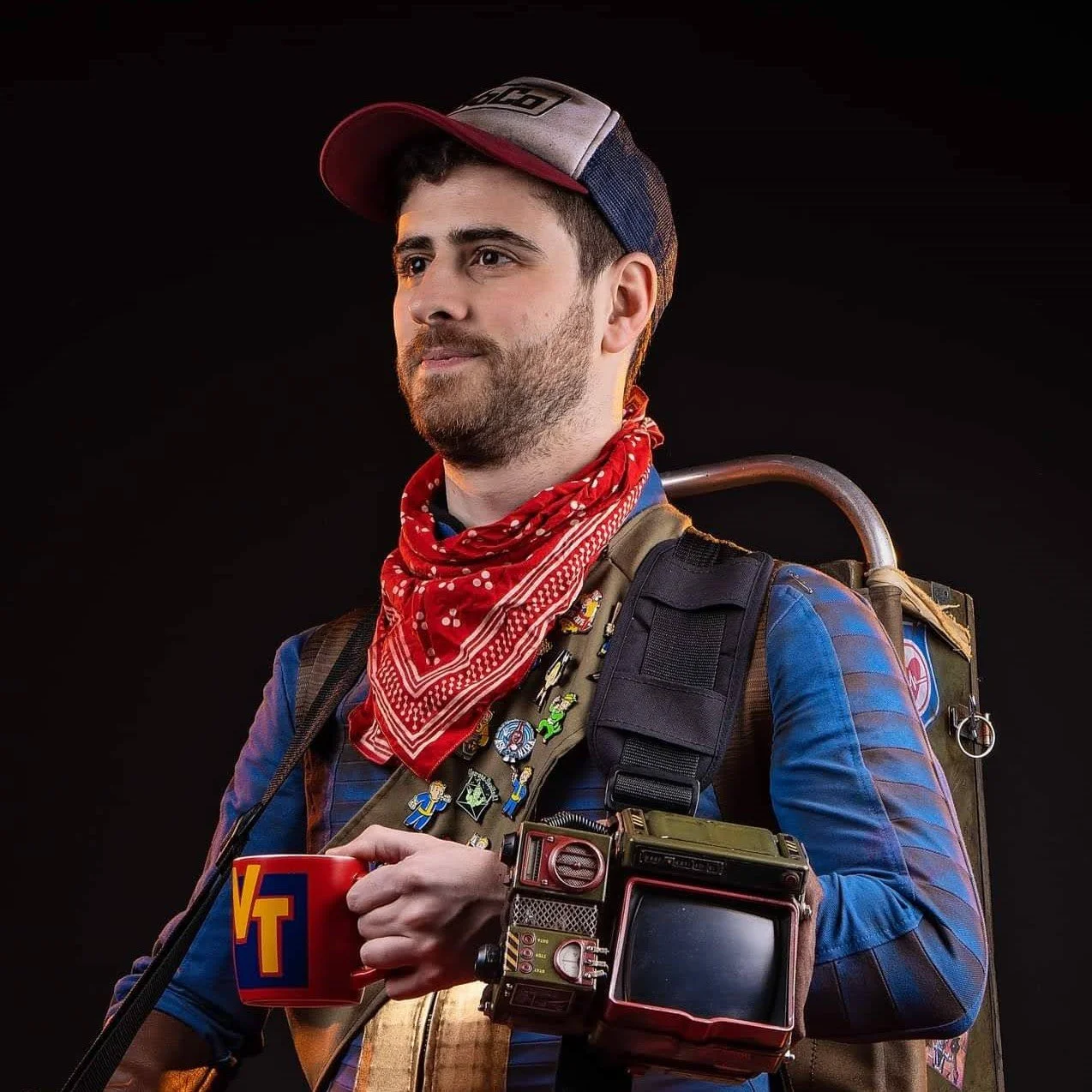
"Fake it till you make it” - Techniques for mimicking finishes and effects on your cosplays.
Most cosplayers have their own tips and tricks for getting different finishes and effects on their cosplays. And with so many cosplayers out there, there’s a lot of different techniques. In saying that, there are some tried and true techniques that I’ve used in both my cosplay builds, and my professional work over the years. In this article I’ll be sharing my various techniques within three main areas; re-colouring, ageing and distressing, and rust and dirtying.
Recolouring:
When people think of recolouring fabric, they usually go straight to dyes. Personally I prefer more control over my colour shades which is why I use water-based acrylics. It allows you to pre-mix your paints into the exact colour you require. Once it’s mixed up its just a matter of pre-wetting your material and then brushing the paint on in a watered down wash. While it’s a really good technique if you need a colour that you cant buy already done, it only really works well with fabrics that will soak in water and paint (such as cotton or polyester blends). It’s also a really good way to save some cash, as you can use white fabrics for you cosplays and then colour them to suit. I’ve been able to use op-shop bedsheets in the past when money has been tight using this technique and if done right it can be indistinguishable from store bought fabric.
Ageing and distressing:
Using the same technique, you can age fabric with watered down acrylic paints. With ageing it’s all about the colours you use. A white will fade your fabric, giving it a sun-bleached look, while a warm tone such as a yellow ochre will make it look like its been discoloured over time. And a dark umber will make it look like its been rolling around in the dirt for a while. The strength of the effect is fully dependant of the dilution of your paint. If you add a lot of water, it will come out light. Add only a little bit and it will come out very strong. The best way to apply this technique is by using a spray bottle. I only put about a tablespoon’s worth of paint in the bottle, fill the rest up with water, then shake it until mixed thoroughly.
I find that I have the best result with this technique and application process by doing multiple passes. I will spray on one layer of the mixture, then wait for it to soak in a little and hold it up to the light. If it needs to be darker that’s when I add a second coat. Mixing tones usually gives a good finish. Doing a layer of yellow ochre, then another layer of dark umber over the top will usually give you a great aged combo. Especially on white or lighter coloured fabrics.
For those times where paper props are required, it can sometimes be hard to use the same techniques and get the same results as you have on your cosplays and solid props, but just a few tweaks of the processes and you’ll be able to use them successfully. When doing an aged wash on paper or cardboard, make sure to remove excess water so the brush is only damp. And as soon as you’ve applied it you’ll want to pat it down with a dry rag or paper towel. Paper tends to react badly to excess water, especially if its got ink on it, but as long as you keep the water to a minimum, dry rapidly, and work in layers once dry, you should have success. Just remember that if you’d like to have your effects set on your piece properly, you should only print using an inkjet printer. Laser printers will give you a nice sheen, but that same sheen is what will repel any water, meaning you wont get the finish you’re looking for.
Distressing is a fun technique but it does require confidence, as usually it means you’re about to cosmetically destroy your nice hard work. But for solid props and costumes, there’s nothing more realistic then coming as close to real deal as you can. Files and hacksaw blades are you best friend when it comes to this technique. They give you a good level of control, while still being able to remove enough material that you’re not sitting there for hours trying to make one cut or dent. There are two ways you can have impactful crevasses and grooves in your work. The first is carving out your knicks and bumps before you paint, doing a base coat then using either tape or a masking agent, cover the groove and paint your overcoat. The second way is you can paint it all up clean, and carve the grooves out afterwards, then dry brush and grooves at the end. I personally like using the second option as it feels more organic to the way an object would be damaged up in the real world. Starts of clean, then gets its knicks and dirt and rust.
Rust and dirtying:
In the same realm, layering is very useful when distressing. If I’m working on a hard surface, I’ll usually layer carving and filing with dry brushing. You can also use dry brushing to mimic surface rust and the stains that usually come from. I will usually dry brush edges with a burnt sienna, then once dry I will do a watered down wash with the burnt sienna over the top, and then dab away the access lightly with a rag or sponge. This usually leaves an orange tinge on your paint jobs and replicates the discolouration that happens when painted metal begins to change hues due to surrounding rust.
Dry brushing is a distressing technique well known in the cosplay community, but I have noticed that some people haven’t realised that you can use dry brushing of a wide range of surfaces; not just solid. Dry brushing over fabric can give great effects! I use it often to add dimension and dirtiness to edges of fabric chest plates, gloves, harnesses, and anything else that needs to look like it’s been put through the ringer. Alternatively, if you water down your dry brushing and add it to collars or crease points, you can add wear and tear from a garment being overworn.
On the opposite side of the spectrum is a dirty wash. Dirty washes are useful for dirtying up surfaces by applying a diluted dirty wash of paint which is then dabbed off with a rag or sponge. Applying thicker paint in corners or crevasses and wiping it away can leave a good effect when paired with a dirty wash. The adding and wiping away creates a realistic dirt look that replicates the effect of a dirty or dusty object that has been cleaned over time.
While usually we all try to avoid overspray when working on our cosplays, it’s very useful when adding layers of dirtiness to your cosplays and props. If you get a high pressure spray paint such as the Montana brand, and spraying from a distance, you can get a nice layer of speckled dirt and grime on your workpiece. Overspray method combined with a dirty wash over the top can really add a lot to your work with minimal effort.
Something I use which I am yet to see anyone else use is shoe polish. Shoe polish is great, quick and easy all rounder when it comes to dirtying up your gear. It can be used in the exact way as a dirty wash. If you cover your entire piece with a brush in the polish, and then wipe away the access, it will discolour your paints/materials, and leave polish in the corners and crevasses. It can be used on fabric too to add natural looking dirty grime to your cosplay. You can also use a heat gun to make it turn to liquid and drip if you’re looking for that specific effect also. It’s a very versatile technique which is a good one to keep in your arsenal for those con crunch rush jobs.
Finishing up:
There are a few items of note that I usually do after I've applied most of these techniques. A satin clear coat in a great way to seal in your effects. It works with all of my techniques when applied to solid works. Sealing your solid objects is a great way to make sure your changes stay permanently. It’s also a great tool for those not as confident in these techniques. If you apply a clear coat before you do your next layer of dirtying or ageing, you’ll be able to easily clean off your second coat if you don’t like it, leaving your first coat intact. Much like how layers in Photoshop work!
For fabrics, I have successfully used Scotchgard Fabric & Upholstery Protector in the past and it has worked very well. It won’t hold up under a deep cycle wash, but you should be able to give your cosplay a light rinse and air dry without losing much of your work.
Of course all this is just what I’ve learned works. The cosplay community is massive and because of that, there are so many different techniques out there. I found out what works best for me by experimenting and tweaking techniques I had heard of. And now that I have shared my techniques, I hope they can help you in the same way.
If you see me around at Cosplay Club events or any conventions, feel free to ask me questions about anything I’ve mentioned here. Or anything else that involves my cosplays. I’m always happy to share my knowledge with the community.